

We are campaigning to get Microsoft to bring this bootcamp to Australia. If you would send people, fill in the survey.
Most Copilot Studio training is for people building their first agent. This bootcamp is for the people who have to make agents work inside an organisation: architects, platform owners and the developers who inherit the result. FutureAbility attended the London event in September 2026. Here is what it is, who runs it, what it covers and where the materials are.
Who runs it
The Copilot Acceleration Team, known as CAT, is part of Microsoft's Copilot Studio engineering group. They deploy Copilot Studio inside Microsoft's largest customers and they also run the education programmes, including Agent in a Day. We wrote about the team and their resources in an earlier insight.
The bootcamp is taught by the engineers who do the deployments. They are not professional trainers, and they are not the product team either. When the billing model changes or a feature moves, they deal with it on a customer site the same week, and that comes through in the sessions.
What it is
Three days, sixteen modules, nine hands-on labs, about sixteen and a half hours of material. The content runs from introductory to advanced. Labs are done in a Microsoft training tenant that every attendee is given a login for.
The September 2026 EMEA event ran at Microsoft's Paddington Central offices in London on 2, 3 and 4 September, with a US event in New York the week before. We attended both this year's London event and the December 2025 one, and ran a recap session for our clients on 18 September.
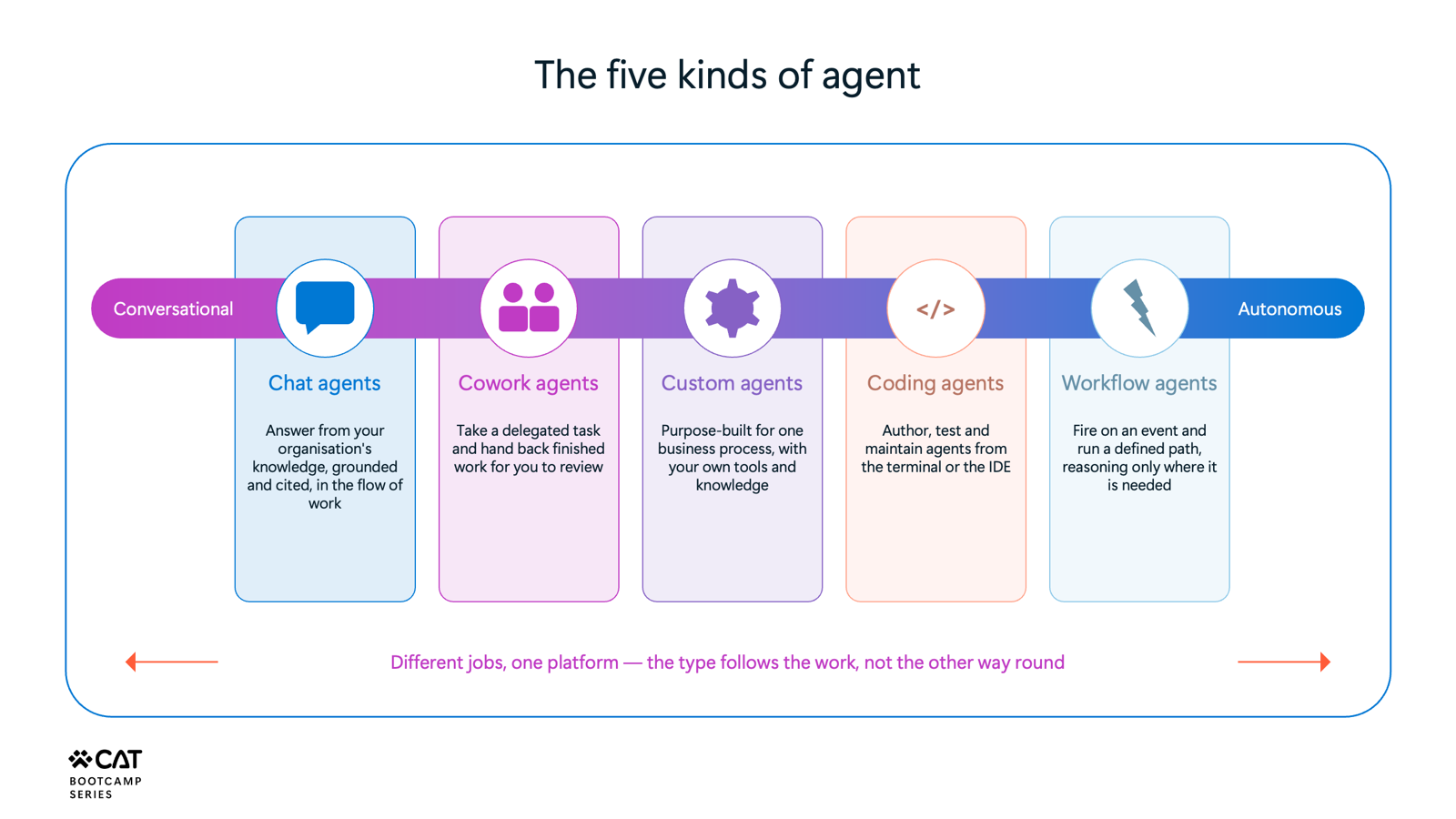
What it covers
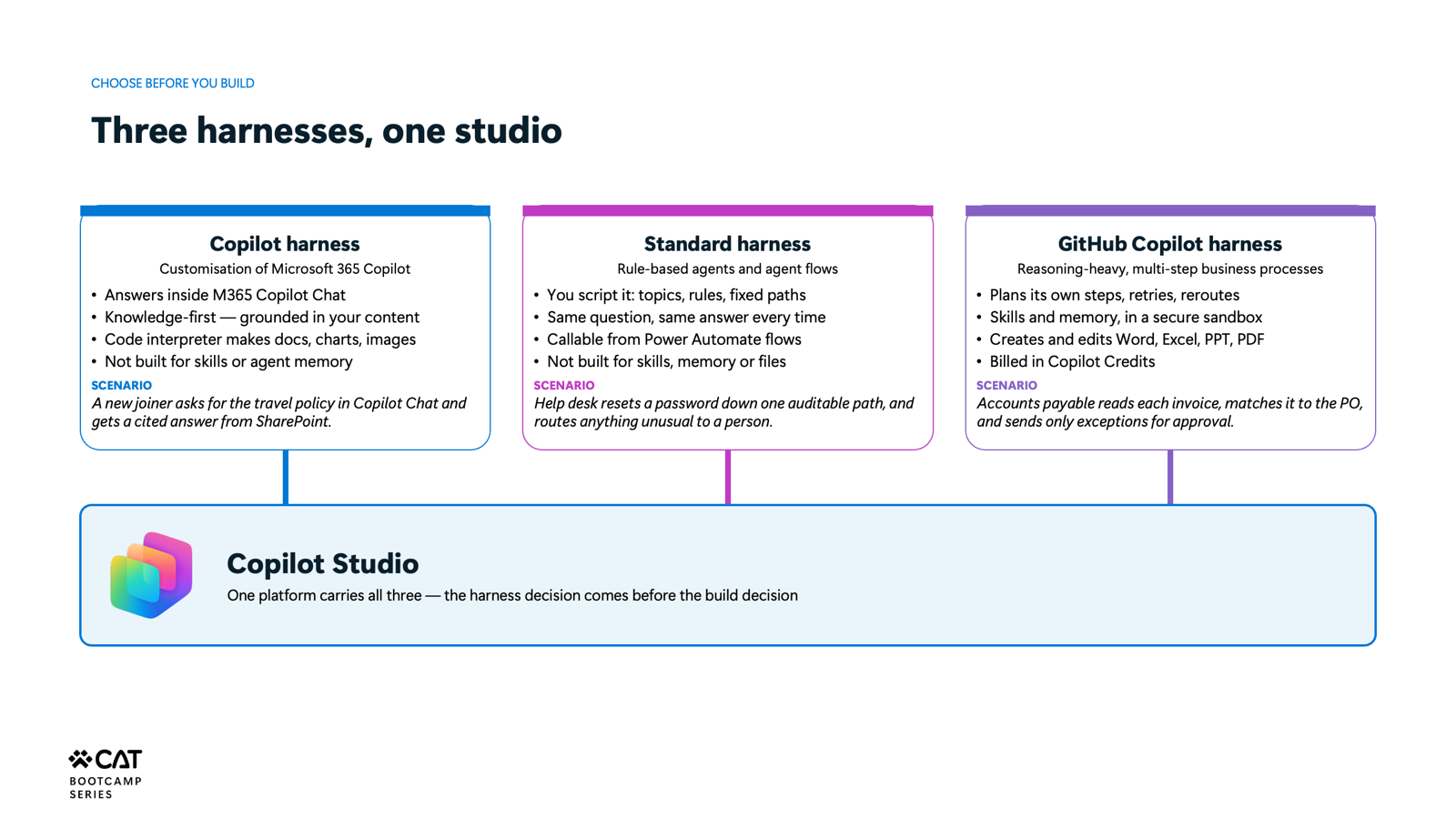
The 2026 programme is organised around the three agent harnesses in Copilot Studio: the Copilot harness (agents built inside Microsoft 365 Copilot), the standard harness (the Copilot Studio most people know, with topics and generative orchestration), and the GitHub Copilot harness, which is the agentic loop the product is moving to. Which harness you build in decides which building blocks you get, so the bootcamp spends a lot of time on that decision.
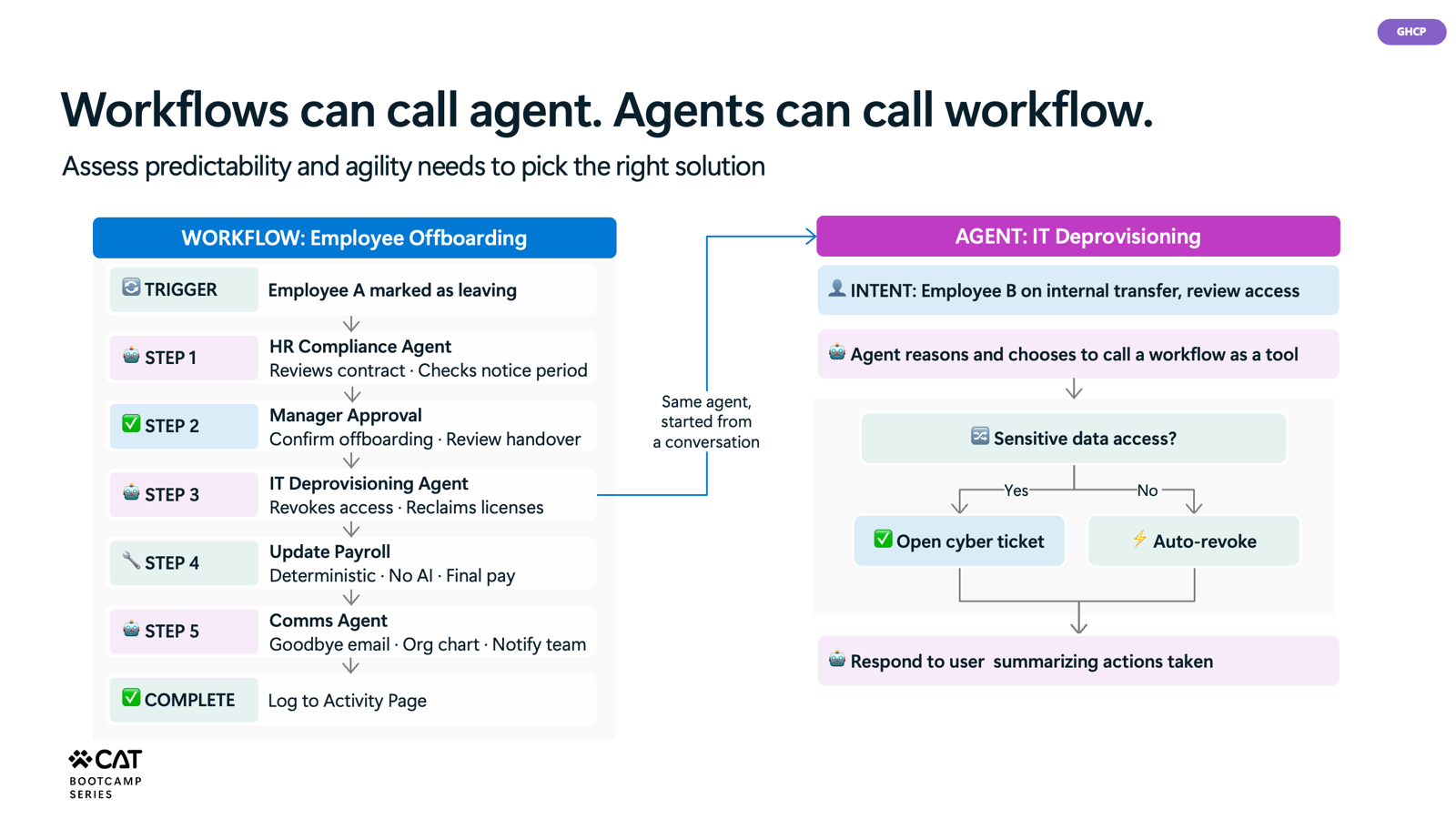
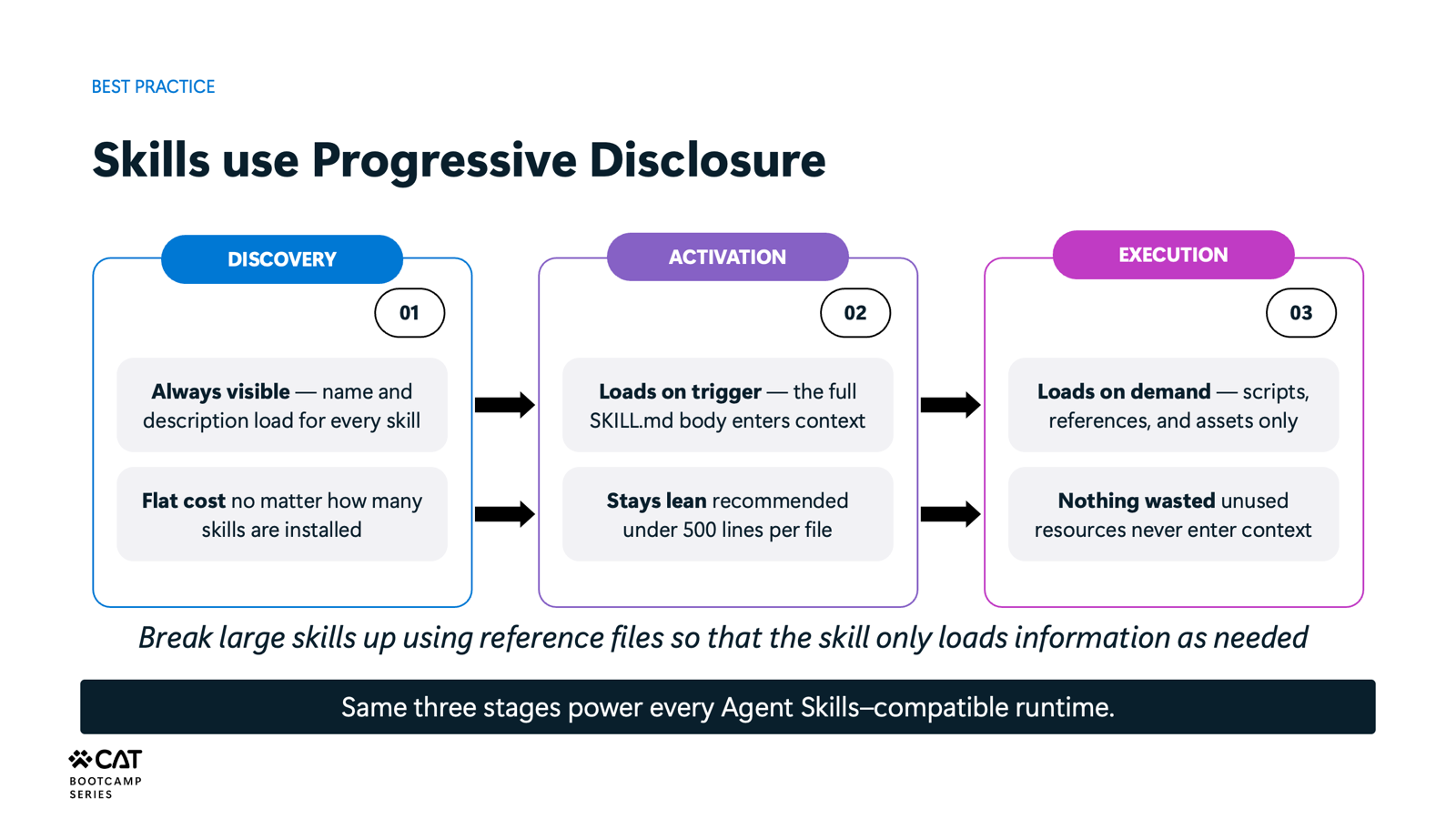
From there it goes into instructions, skills, knowledge and tools, and how to keep an agent efficient on tokens. Then workflows, which now trigger agents and do the deterministic steps around them. Then multi-agent systems, application lifecycle management, analytics and evaluation, coding agents and the command line tooling, and a closing module on AI FinOps: how Copilot Credits are bought, allocated to environments and kept under control.
The materials
Microsoft publishes the slide deck for every module. The event page is Architecture Bootcamp V3, and the decks are linked below. The labs are on the same site.
| Module | Title | Deck |
|---|---|---|
| 1 | Agents and workflows: making them real | Slides |
| 2 | M365 Copilot | Slides |
| 3 | Cowork, skills and plugins | Slides |
| 4 | Orchestration, harnesses and component models | Slides |
| 5 | Deep dive: instructions and descriptions | Slides |
| 6 | Deep dive: skills | Slides |
| 7 | Deep dive: knowledge and tools | Slides |
| 8 | Copilot harness: Agent Builder and declarative agents | Slides |
| 9 | Standard harness: component model | Slides |
| 10 | GitHub Copilot harness: component model | Slides |
| 11 | Creating agents in the GitHub harness, from the UX and from chat | Slides |
| 12 | Workflows | Slides |
| 13 | Multi-agent | Slides |
| 14 | ALM, reporting, analytics and evaluations | Slides |
| 15 | Coding agents: plugin, migration and new creation | Slides |
| 16 | AI FinOps | Slides |
Two other CAT resources sit well beside the decks: the Custom Engine blog, where the team writes up patterns as they land, and the Copilot Studio Kit for testing and evaluating agents.
Bringing it to Australia
The bootcamp has not run in Australia. We are campaigning to change that, and the case rests on showing Microsoft there are organisations here building on Copilot Studio who would send architects and developers for three days.
If that is you, fill in the survey. It asks who you are, what you are building, whether you would attend and which topics matter most to you.
Interested in an online recap in the next few weeks? We can run one. Say so in the same survey.
Sources and further reading
Microsoft - Architecture Bootcamp V3, event page, decks and labs
Microsoft Copilot Acceleration Team - Architecture Bootcamp programme
FutureAbility - Bookmark this page: introducing Microsoft's Copilot Acceleration Team
Slides reproduced from the Microsoft CAT Bootcamp Series decks, which Microsoft publishes on the event page.